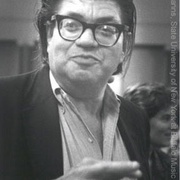
 © Rolf Hanns
Morton Feldman
Compositeur américain né le 12 janvier 1926 à New York, mort le 3 septembre 1987 à Buffalo.
Né le 12 janvier 1926 à Manhattan (New York), second fils d’Irving et Francis Feldman, Morton Feldman est issu d’une famille juive d’origine ukrainienne, qui avait immigré aux États-Unis, en passant par Varsovie. Il étudie le piano avec une élève de Ferruccio Busoni, Vera Maurina Press, qui avait autrefois côtoyé Alexandre Scriabine dont l’influence sur les premières œuvres de Feldman est manifeste, et qui lui inculque « une sorte de musicalité vibrante, plutôt que du métier musical ». Pionnier américain du dodécaphonisme, qu’il n’aborde pourtant jamais en cours, Wallingford Riegger lui donne, à partir de 1941, des leçons de contrepoint. En 1944, Stefan Wolpe devient son professeur de composition et arrange rapidement une rencontre entre Feldman et Edgard Varèse, qui lui dit : « Vous savez, Feldman, vous survivrez. Je ne suis pas inquiet pour vous. » Longtemps, Feldman se rendra chez Varèse presque toutes les semaines, « ne se sentant pas très différent des gens qui font un pèlerinage à Lourdes et en espèrent une guérison ».
En janvier 1950, à l’occasion d’un concert du New York Philharmonic dans la Symphonie op. 21 d’Anton Webern sous la direction de Dimitri Mitropoulos, Feldman rencontre John Cage et emménage bientôt dans le même édifice que lui, la Bossa’s Mansion, sur Grand Street, près de l’East River. Projection 1 (1950), pour violoncelle, est sa première œuvre notée graphiquement. Avec l’arrivée de Christian Wolff, d’Earle Brown et de David Tudor, naît, autour de Cage et de Feldman, ce que l’on nomme sans doute hâtivement la « New York School » — et Henry Cowell de consacrer un article à « Cage et ses amis », en janvier 1952, dans The Musical Quarterly.
Si Feldman utilise encore la notation graphique dans Projection 2 (1951), confiant la hauteur à l’interprète, mais au sein d’un registre, d’une dynamique et d’une durée déterminés, et s’il développe plus tard, dans la série des cinq Durations (1960-1961), une écriture dite race-course, où les hauteurs et les timbres sont choisis, mais non la durée, toutefois inscrite dans un tempo général, où donc la coordination verticale est fluctuante, il y renonce entre 1953 et 1958, puis de manière définitive en 1967, avec In Search of an Orchestration, car il refuse d’assimiler son art à l’improvisation.
Au cours des années 1960, la lecture de Kierkegaard s’avère essentielle à la recherche d’un art excluant toute trace de dialectique. Doyen de la New York Studio School (1969-1971), Feldman s’intéresse pendant les années 1970 aux tapis du Proche et du Moyen Orient, qu’il collectionne comme les livres et les articles sur le sujet, dans le souci, musical, de « symétries disproportionnées » circonscrivant le matériau dans le cadre d’une mesure.
En 1970, il noue une relation avec l’altiste Karen Philipps, pour qui il entreprend la série The Viola in My Life. Après avoir composé The Rothko Chapel, destiné à la chapelle œcuménique de Houston (Texas), Feldman vit, de septembre 1971 à octobre 1972, à l’invitation du DAAD, à Berlin, où il déclare avoir redécouvert sa judéité. Nommé professeur à l’Université de New York/Buffalo à son retour en 1973, il occupera jusqu’à sa mort la chaire Edgard-Varèse. « Il va falloir que je leur apprenne à écouter. »
En 1976, de nouveau à Berlin, Feldman rencontre Samuel Beckett, qui lui envoie quelques semaines plus tard, sur une carte postale, son poème neither en guise de livret pour un opéra créé l’année suivante à Rome, au Teatro dell’Opera, dans une scénographie de Michelangelo Pistoletto. À Samuel Beckett, Feldman consacrera encore deux autres partitions en 1987 — la musique d’une pièce radiophonique, Words and Music, et For Samuel Beckett, pour ensemble. Dès 1978, ses œuvres s’étaient risquées à une musique aux nuances infimes, qui ne transige plus sur la durée de leur déploiement au regard des conventions, des possibilités d’exécution et des attentes du public — un art qui culmine notamment dans String Quartet (II) (1983), dont la durée avoisine les cinq heures.
Feldman enseigne encore, notamment en Allemagne, aux Cours d’été de Darmstadt, entre 1984 et 1986. Un cancer l’emporte le 3 septembre 1987.
Feldman fut l’ami du poète Frank O’Hara, du pianiste David Tudor, des compositeurs John Cage, Earle Brown et Christian Wolff, et des peintres Mark Rothko, Philip Guston, Franz Kline, Jackson Pollock, Robert Rauschenberg ou encore Cy Twombly — certains de ces noms jalonnant les titres de ses œuvres.
© Ircam-Centre Pompidou, 2008
Morton Feldman
Par Laurent Feneyrou
« L’une de mes histoires préférées est celle d’un jeune homme qui va voir un maître Zen ; il doit rester auprès de lui sept ans, je crois. Le maître Zen lui donne un balai et, pendant sept ans, on lui dit de balayer la maison. Il balaye donc la maison ; il est là, à un endroit, et le maître est à un autre endroit avec un sabre. Le gars est là avec son balai et le maître arrive par derrière en poussant un cri perçant, en hurlant, et le jeune homme soulève son balai. Après un certain temps, le jeune homme écoute et il entend le maître se déplacer là-bas ; il se retourne alors et attend. Ou bien, il le laisse passer et se tient dans un coin ; la faculté de se mettre à l’écoute lui vient lentement. Il s’en imprègne, vous voyez. Il passe ainsi maître dans toutes les nuances de l’écoute, de la préparation et du positionnement naturel du corps, et au bout des sept années, il monte en grade. On lui reprend son balai et on lui remet un sabre1 », racontait Morton Feldman. Dans la tradition musicale européenne, ce qui est écouté est en réalité inscrit dans une structure, dans un récit ou dans un drame l’expliquant par ce qu’il n’est pas, réduisant le discours musical à une écoute de la métaphore, et entravant les possibilités mêmes de la perception. En somme, nous traduisons des faits musicaux en contenus littéraires. « Et je suis toujours d’avis que les sons sont destinés à respirer… et non pas à être mis au service d’une idée. » Feldman suggère ainsi que ce qui semble appartenir a priori au langage musical, l’écoute, est à redécouvrir.
Cette écoute, suivant l’enseignement de Varèse, dont Feldman fut comme l’élève, et dont il écrit avoir imité sinon la musique ou le style, du moins l’attitude, la « manière de vivre », est écoute du son :
a. De Charles Ives à John Cage, la tradition américaine est empirique. Le concept, la logique, les règles d’engendrement et de construction, le souci autoritaire et intimidant du faire et de la justification du geste, au détriment de l’écoute, ne suffisent pas à démontrer la validité d’une assertion musicale. Importent davantage la sensation, au pouvoir discriminant, et le souvenir, dont le propre serait la persistance. À la recherche d’une « volonté consciente de formaliser une désorientation de la mémoire », Feldman évoque les tapis turcs : si le tapis persan peut être vu à partir de chacun de ses fragments, dans le tapis turc, le dessin n’est visible que transféré dans la mémoire, excluant toute vision d’ensemble de ses tissages. Or, en musique, la forme, primitive, se basait autrefois sur une convention magnifique d’inattention, dont témoignent encore les modèles classiques : ABA, scherzo ou forme-sonate. Décrire une œuvre en réduisant ses sections à des lettres (a, b, c…), desquelles naîtrait, par leur succession, une forme, c’est manquer l’oublieuse mémoire de nos perceptions — d’où l’inadéquation d’une telle analyse à laquelle est parfois réduit l’écheveau des gestes et figures feldmaniens. Contre la religion, le caractère « thomiste » de la vérité du matériau, telle qu’elle s’exprime non chez Webern, mais chez ses continuateurs ou ses imitateurs, en tant que ce matériau y est objectal, extérieur au musicien, Varèse désigne la traversée résolue de l’expérience, brisant le diktat des structures, l’omniscience des systèmes ou des méthodes qui, avec une précision d’automate, choisissent au nom même des sons. En retour, l’esprit de la musique de Webern, dont Feldman se déclare, avec Cage, le « fils illégitime », primera sur sa dialectique sérielle : le silence ; la synthèse de l’horizontal et du vertical ; l’image en miroir, variation du rythme et de la distribution des accords dans la mesure, anticipant ainsi des symétries disproportionnées ; le motif (ou pattern) enfin, auquel Feldman reviendra tardivement.
b. « Varèse m’a donné une leçon dans la rue : ça a duré une demi-minute et ça a fait de moi un orchestrateur. Il m’a demandé : “Qu’êtes-vous en train d’écrire en ce moment, Morton ?” Je le lui racontai ; et il a dit : “Assurez-vous de bien penser au temps que cela prend, depuis la scène jusqu’ici dans le public2.” » Le son, dans l’espace, mais aussi, ce à quoi Feldman voua son enseignement : le cheminement vers la composition par le biais de la réalité acoustique, de l’instrumentation. « Connais ton instrument ! Connais-toi toi-même ! », édicte Feldman. Le son n’y met pas en valeur l’instrument et les subtilités de sa facture, lesquels, toujours disponibles, produisent ce son dans sa beauté, mais au risque de lui voler son immédiateté, de l’exagérer, de le brouiller, de le rendre à un sens, à une insistance, qui lui sont étrangers. Car il y aurait un son pur, au-delà ou en deçà de l’instrument, que la couleur, donnée a posteriori ou soulignant les articulations, transforme en un pochoir, sinon en une ressemblance fallacieuse de son.
c. Guère de protestation contre le passé, car se rebeller contre ce passé, c’est encore lui appartenir, mais une indifférence au processus historique et un intérêt pour le son en soi, car le son n’a pas d’histoire. Par l’acoustique, par la physique, Varèse, détruisant la causalité harmonique et ouvrant une autre écoute, est dans le son, comme Mondrian est dans sa toile — quoique laissent accroire ses écrits théoriques. Et l’objet sonore n’est pas dans le temps, ne disserte pas sur la nature du temps, mais existe comme temps, qu’il « projette », selon le verbe de Feldman, où résonne le dripping de Jackson Pollock, cette technique consistant à laisser s’égoutter la peinture, à l’aide de seaux percés, d’un ustensile, d’un pinceau, sur la totalité d’une toile étendue à même le sol.
d. L’insistance sur le son modifie l’appréhension de la forme : « Ses formes musicales répondent les unes aux autres, plus qu’elles entretiennent des rapports entre elles3 », écrivait Feldman de Varèse, qui serait à l’origine d’une « majesté quasi immobile », « comme un soleil qui s’immobiliserait à l’ordre d’un Josué moderne ». Selon l’essai « Symétries tronquées », il en est ainsi de l’introduction exceptionnellement longue d’*Intégrales*, créée à partir de trois notes, où Varèse utilise le schéma additif et la transformation continue des formes rythmiques et des proportions de durée. Une telle stase, conservatrice d’une tension, à l’image des toiles de Rothko, où « c’est gelé et en même temps, ça vibre », constitue l’influence majeure de la peinture sur la musique. C’est établir l’indissolubilité du son et du temps, d’où, chez Feldman, l’idée d’une œuvre comme toile temporelle. « Ce avec quoi nous tous, en tant que compositeurs, avons réellement à œuvrer, c’est le temps et le son — parfois je ne suis même pas sûr pour le son. » Moins encore le son que sa saison, ou que la durée, donc, avant l’intelligence, la rhétorique ou l’imagination, dont entend témoigner tout musicien.
L’exigence d’un retour à l’écoute nécessite comme une epoché, où l’auditeur atteint sinon l’extase, du moins le recueillement du phénomène de l’écoute sur la base de la perception du son, dans la singularité d’une notation graphique comme dans l’écriture d’usage. S’affirme la nécessité de pénétrer lentement à l’intérieur des sons, si lentement que la forme se dissipe dans la fatigue de la mémoire et se transforme en échelle, où « on laisse tout simplement courir, et puis on voit ce qui se passe ». Les mailles du temps se dénouent dans un désir d’éternité. « L’Odyssée est-elle trop longue ? », répondait Feldman à ceux qui n’y entendaient qu’ennui. L’auditeur s’imprègne de plus en plus profondément, de manière presque proustienne, de la pensée — Proust, qui d’ailleurs relierait Feldman et Samuel Beckett, l’un ayant eu connaissance de la fameuse étude de l’autre, où le temps, source de lyrisme, aboli au même titre que l’espace, donne forme à l’œuvre. Non le passé comme caillou lourd et menaçant du sentier rebattu des heures et des jours, mais la mémoire involontaire de Proust, la déflagration du souvenir nouant le présent et le passé en un commun plus essentiel que chacun des deux termes pris isolément.
Feldman remit ainsi radicalement en question le thème d’un sujet souverain qui viendrait de l’extérieur animer l’inertie des codes et des signes, et qui déposerait dans le discours la trace indélébile de sa liberté, car le créateur doit échouer pour que l’art advienne : « Vous connaissez les termites. Ces insectes qui mangent le bois. C’est très, très intéressant. Qui mâche le bois ? La termite ne peut pas le mâcher. Mais, à l’intérieur, des millions de microbes le mâchent. Il y a une analogie avec la composition : quelque chose d’autre fait le travail4. » Non plus conscience absolument libre et se posant soi-même, tel qu’il avait été défini de Descartes à Sartre, le sujet ne se constitue pas plus ici sur le fond d’une identité psychologique, mais à travers des pratiques, des écoutes et des touchers. L’œuvre de Feldman naît d’une concentration sur les résonances du piano, un piano qui l’obligeait à ralentir, et pour lequel le temps, réalité acoustique, devenait plus audible. Feldman inventa d’ailleurs une technique de jeu où le pianiste appuie silencieusement sur les touches jusqu’à un point de résistance qui libère alors un son feutré, assourdi. Toute note ainsi jouée acquiert une résonance particulièrement longue et une présence musicale qui suspendrait les exigences structurelles de la composition. En outre, la dynamique, aux confins de l’audible, élément de tension pour l’instrumentiste et pour l’auditeur, invités de la sorte à aiguiser leur attention, y contribue pleinement, soudant les timbres instrumentaux, à la lisière de l’extinction, et au risque de l’instabilité. L’écriture se concentre sur la naissance du son, en fonction de l’attaque, souvent dévoisée, sur la douceur du son et sur son mode d’extinction, même si Feldman déclarait, plus réservé : « Je ne crois même pas que ma musique soit douce… Ce qui est doux, ce sont les connexions. Ma musique est du même niveau sonore qu’un quatuor de Schubert. Si les choses semblent plus calmes, c’est parce que les liens sont plus longs. »
Loin de la variation beethovénienne, brahmsienne ou schoenbergienne, « dispositif technique merveilleux pour atteindre le maximum d’unité dans le moment », les principes de changement et de répétition, ou plutôt, de réitération aux déplacements ténus ou discrets, témoignent de la différenciation, d’une ressemblance de répétition : une surface qui sonne « comme de la répétition », à l’instar des harmonies chromatiques de trois sons ou de patterns au phrasé sans cesse modifié. Un même élément s’illumine sous un angle différent, sans que l’on sache jamais quel phénomène est l’ombre de l’autre. Dans un monde de nuances et de chromatismes gradués, où s’opère un lent dévoilement, chaque ligne énonce une même pensée, mais toujours dite autrement. L’intervalle de la variante s’apparente lointainement à celui de la traduction, que Beckett pratiqua aussi toute sa vie sur lui-même et sur d’autres. Relisons à ce titre Sébastien Chamfort, moraliste du XVIIIe siècle : « Que le cœur de l’homme est creux et plein d’ordure », et la traduction anglaise de cette épigramme, par Beckett : « How hollow heart and full of filth thou art. » Traduction et transcription musicale sont ici étroitement liées. Beckett traduit, versifie et réduit encore l’ellipse de Chamfort. Phraser, c’est être à l’écoute de ces traductions / transcriptions. Feldman le dit aussi, mais autrement : l’écriture de Beckett détermine l’infime déplacement du son. Selon le musicien, le poète écrit une phrase en français. La phrase suivante, identique, est en anglais, puis retraduite, éloignant ainsi, par une double traduction, la phrase première de la seconde : « Chaque ligne était en réalité la même pensée, dite d’une autre manière. Et pourtant la continuité donne l’impression qu’il se passe autre chose. Mais il ne se passe rien d’autre5. » La différence est si mince qu’un même motif revient, auquel il suffit désormais d’ajouter une note, un mot, ou d’en retrancher deux. Il en est de même de l’accord, mais dans un autre registre, dans une autre instrumentation, dans un autre mètre ou dans une autre nuance. « Je peux me contenter de continuellement réarranger les mêmes meubles dans la même chambre. » Seul un trait significatif subsiste, afin de rendre préhensible la filiation. La composition porte seulement sur le choix d’un motif à répéter, et pour combien de temps, ainsi que sur la nature de sa variante. Le génie du musicien, que Feldman cherchait notamment chez Beethoven, tiendra à son sens du timing, du moment exact de l’introduction d’un élément, ni avant ni après, et de sa durée, de sorte que la musique, art du temps, donne au temps son essence, en lui imprimant son tempo. Et Feldman de refuser à ses étudiants le droit d’inscrire un signe de reprise. Non, donc, la vision cauchemardesque du retour du tout, de l’identique ou du même, mais une différence, dont Feldman se fait l’exégète attentif et patient.
Comme la construction du discours ne procède ni de la variation, ni du développement, mais de cette variante, partant de l’alliance, la forme tient essentiellement du et. Une telle pensée est fondamentalement une pensée de la parataxe, le mode d’ordonnancement (taxis) selon lequel les éléments d’une phrase ne sont pas mis ensemble (sun) comme le veut la logique syntaxique, mais juxtaposés, mis à côté les uns des autres (para), en vertu d’un principe d’apposition autre que logique, et sans que le mot de liaison indique la nature du rapport entre les propositions. S’inscrivant dans une poétique du et, Feldman, qui n’eut de cesse de décliner toute tentation de causalité, au point de se définir comme un maître de l’harmonie non fonctionnelle (« master of non-functional harmony »), retrouve la construction de la phrase hébraïque procédant par courtes propositions coordonnées par la conjonction we, aux valeurs variées selon le contexte. En outre, cette construction se rattacherait à la tradition de l’exégèse juive, privilégiant l’inachevé, le partiel, l’indécis, la profusion, l’agglutinement, l’ouverture comme principe herméneutique, source de créativité permanente. D’Akiba ben Josef, maître (tanna) de l’époque de la Michnah, halakhiste qui inaugura de nouvelles méthodes d’interprétation du Livre et qui contribua ainsi à étendre sur une vaste échelle la Loi orale, de ce sage condamné à mort et exécuté à Césarée sous une horrible torture, ses chairs déchirées par les Romains à l’aide de « peignes de fer », de ce martyr qui prononça alors le dernier mot du Shema : Un (ehad), Rabbi Akiba (1963), pour soprano, flûte, cor anglais, cor, trompette, trombone, tuba, percussion et piano, ne résonne-t-il pas ? Si Hillel l’Ancien avait mis au point sept méthodes d’interprétation, rabbi Akiba, s’appuyant sur les variantes orthographiques et les particularités du Pentateuque pour en extraire des significations insoupçonnées, établit d’autres règles à partir des préfixes et des suffixes. L’œuvre de Feldman emprunte-t-elle à une telle herméneutique, visant à dévoiler le sens caché de la Bible ? N’est-ce pas aussi une manière de s’extraire du fondement moral de la variation, celui de la musique allemande du XIXe siècle, de Beethoven à Brahms, un fondement moral dont le nazisme avait ruiné les valeurs ? Avec Adorno, avec Steiner, Feldman s’interroge sur le statut de l’œuvre d’art après Auschwitz : « Je veux être le premier grand compositeur juif », disait-il.
- Morton FELDMAN, « The future of local music » (1984), dans Give My Regards to Eighth Street. Collected Writings of Morton Feldman, Cambridge, Exact Change, 2000, p. 189 ; traduction française, sous le titre « Conférence de Francfort », dans Écrits et Paroles, Paris, L’Harmattan, 1998, p. 304 (traduction légèrement modifiée).
- « The future of local music », op. cit., p. 170 ; « Conférence de Francfort », op. cit., p. 291.
- Morton FELDMAN, « Some elementary questions » (1967), dans Give My Best Regards to Eighth Street. Collected Writings of Morton Feldman, op. cit., p. 66 ; traduction française, sous le titre « Quelques questions élémentaires », dans Écrits et Paroles, op. cit., p. 178.
- Morton FELDMAN, « Darmstadt lecture » (1984), in Morton Feldman Says. Selected Interviews and Lectures 1964-1987, Londres, Hyphen Press, 2006, p. 208 ; traduction française, sous le titre « Conférence de Darmstadt », in Écrits et Paroles, op. cit., p. 335-336 (traduction légèrement modifiée).
- « Darmstadt lecture », op. cit., p. 194 ; « Conférence de Darmstadt », op. cit., p. 313.
© Ircam-Centre Pompidou, 2008
- Musique soliste (sauf voix)
- [Composition sans titre] pour piano, composée dans les années quarante (1940), Inédit
- First Piano Sonata (in One Movement) pour piano (1943), Inédit
- Andante moderato pour piano (1944), Inédit
- Self-Portrait pour piano (1945), Inédit
- Illusions pour piano (1948), Theodore Presser
- Projection I pour violoncelle (1950), Peters
- Three Dances pour piano (avec tambour et verre dans le troisième mouvement) (1950), Inédit
- Two Intermissions pour piano (1950), Peters
- Intermission III pour piano (1951), Inédit
- Intersection II pour piano (1951), Peters
- Nature Pieces pour piano (1951), Inédit
- Variations pour piano (1951), Inédit
- Extensions II pour piano (1951-1952), partition retirée du catalogue
- Extensions III pour piano (1952), Peters
- Intermission IV pour piano (1952), Inédit
- Intermission V pour piano (1952), Peters
- Piano Piece 1952 (1952), Peters
- Intermission VI pour un ou deux pianos (1953), Peters
- Intersection + pour piano (1953), Inédit
- Intersection III pour piano (1953), Peters
- Intersection IV pour violoncelle (1953), Peters
- Three Pieces for Piano (1954), Peters
- Piano Piece 1955 (1955), Peters
- Piano Piece 1956 A (1956), Peters
- Piano Piece 1956 B (1956), Peters
- Last Pieces pour piano (1959), Peters
- Piano Piece (to Philip Guston) (1963), Peters
- Vertical Thoughts IV pour piano (1963), Peters
- Piano Piece 1964 (1964), Peters
- The King of Denmark pour percussion (1964), 7 mn, Peters [note de programme]
- The Possibility of a New Work for Electric Guitar (1966), partition perdue
- Piano (1977), 25 mn, Universal Edition
- Principal Sound pour orgue (1980), 20 mn, Universal Edition [note de programme]
- For Aaron Copland pour violon (1981), Inédit
- Triadic Memories pour piano (1981), 1 h 30 mn, Universal Edition
- For Bunita Marcus pour piano (1985), 1 h 15 mn, Universal Edition
- A Very Short Piece for Trumpet (1986), Universal Edition
- Palais de Mari pour piano (1986), 20 mn, Universal Edition
- Musique de chambre
- [Composition sans titre, non datée] pour cor en fa, célesta et quatuor à cordes (), Inédit
- Sonata for Violin and Piano (1945), Inédit
- Sonatina for Cello and Piano (1946), Inédit
- Two Pieces pour violoncelle et piano (1948), Inédit
- Piece for Violin and Piano (1950), Peters
- [composition sans titre] pour quatuor à cordes (1949-1950), Inédit
- [Composition sans titre] pour deux pianos et violoncelle (1950), Inédit
- Extensions I pour violon et piano (1951), Peters
- Music for the Film Jackson Pollock musique pour le film de Hans Namuth et Paul Falkenberg, pour deux violoncelles (1951), 7 mn, Inédit
- Projection II pour cinq instruments (1951), Peters
- Projection III pour deux pianos (1951), Peters
- Projection IV pour violon et piano (1951), Peters
- Structures pour quatuor à cordes (1951), 6 mn, Peters
- [composition sans titre] pour violoncelle et piano (1951), Inédit
- Extensions IV pour trois pianos (1953), Peters
- Extensions V pour deux violoncelles (1953), partition retirée du catalogue
- Structure II pour deux violoncelles (1953), Inédit
- Two Pieces for Two Pianos (1954), 2 mn, Peters
- Three Pieces for String Quartet (1954-1956), Peters
- Two Pieces for Six Instruments (1956), Peters
- Piano (Three Hands) (1957), Peters
- Piece for Four Pianos (1957), Peters
- Two Pianos (1957), 3 mn, Peters
- Piano Four Hands (1958), Peters
- Two Instruments pour cor et violoncelle (1958), Peters
- [Composition sans titre] pour deux pianos (1958), Inédit
- Durations I pour quatre instrument (1960), Peters
- Durations II pour violoncelle, piano (1960), Peters
- Durations III pour tuba, violon et piano (1961), Peters [note de programme]
- Durations IV pour vibraphone, violon et violoncelle (1961), Peters
- Durations V pour six instruments (1961), Peters
- Two Pieces for Clarinet and String Quartet (1961), Peters
- [Composition sans titre] pour quatuor à cordes (1957-1962), Inédit
- De Kooning musique de Willem de Kooning, film de Hans Namuth et Paul Falkenberg (1963), pour cinq instruments (1963), 12 mn, Peters
- Vertical Thoughts 2 pour violon et piano (1963), 6 mn, Peters
- Vertical Thoughts I pour deux pianos (1963), Peters
- [Composition sans titre] pour violoncelle (?) et piano (1964), Inédit
- Four Instruments pour cloches, piano, violon et violoncelle (1965), Peters
- Two Pieces for Three Pianos (1965-1966), Peters
- False Relationships and the Extended Ending pour sept instruments (1968), 16 mn, Peters
- Between Categories pour huit instruments (1969), Peters
- Merce pour percussion et clavier (1963-1969), Inédit
- [Composition sans titre] pour six percussions et célesta (1963-1969), Inédit
- The Viola in My Life III pour alto et piano (1970), 6 mn, Universal Edition
- Three Clarinets, Cello and Piano (1971), 8 mn, Universal Edition
- Five Pianos (1972), variable, Universal Edition
- Half a Minute It's All I've Time For pour quatre instruments (1972), Inédit
- [Composition sans titre] pour trois flûtes (1972), Inédit
- For Frank O'Hara pour six instruments (1973), 13 mn, Universal Edition
- Instruments I pour cinq instruments (1974), 18 mn, Universal Edition
- Four Instruments pour piano et trio à cordes (1975), 6 mn, Universal Edition
- Instruments III pour flûte, hautbois et percussions (1977), 20 mn, Universal Edition
- Spring of Chosroes pour violin et piano (1977), 12 mn, Universal Edition
- Why Patterns? pour flûte, piano et glockenspiel (1978), 35 mn, Universal Edition
- String Quartet (1979), 1 h 40 mn, Universal Edition
- Trio pour violon, violoncelle et piano (1980), 1 h 20 mn, Universal Edition
- Bass Clarinet and Percussion (1981), 17 mn, Universal Edition
- Patterns in a Chromatic Field pour violoncelle et piano (1981), 1 h 30 mn, Universal Edition
- For John Cage pour violon et piano (1982), 1 h 15 mn, Universal Edition
- Clarinet and String Quartet (1983), 45 mn, Universal Edition
- Crippled Symmetry pour flûte, piano et percussions (1983), 1 h 30 mn, Universal Edition
- String Quartet II (1983), entre 3 h 30 mn et 5 h 30 mn, Universal Edition
- For Philip Guston pour flûte, piano et percussions (1984), 4 h, Universal Edition
- Piano and String Quartet (1985), 1 h 10 mn, Universal Edition
- For Christian Wolff pour flûte et piano (1986), 2 h, Universal Edition
- Piano, Violin, Viola, Cello (1987), 1 h 15 mn, Universal Edition
- Musique instrumentale d'ensemble
- Dirge. In Memory of Thomas Wolfe pour orchestre (1943), Inédit
- Jubilee pour orchestre à cordes (1943), Inédit
- Night pour orchestre à cordes (1943), Inédit
- [composition sans titre] pour orchestre à cordes (1945), Inédit
- Episode pour orchestre (1949), Inédit
- Intersection I pour grand orchestre (1951), Peters
- élec Marginal Intersection pour orchestre (1951), Peters
- Projection V pour sept instruments (1951), Peters
- Eleven Instruments pour ensemble de chambre (1953), Peters
- scénique Ixion Summerspace, ballet pour ensemble de chambre ou deux pianos (1958), 11 mn, Peters
- Atlantis pour ensemble de chambre (1959), Peters
- Composition pour quinze instruments (1959), Inédit
- Instrumental Music pour ensemble (1959), Inédit
- Josquin Desprez, Tu Pauperum Refugium arrangement pour ensemble (1960), Inédit
- Montage 2, On the Theme of « Something Wild » avec Mike Stoller, pour ensemble jazz (1960), Inédit
- Montage 3, On the Theme of « Something Wild » avec Jerry Leiber et Mike Stoller, pour ensemble jazz (1960), Inédit
- Piece for Seven Instruments (1960), Inédit
- Out of « Last Pieces » pour orchestre (1961), 8 mn, Peters
- The Straits of Magellan pour sept instruments (1961), 5 mn, Peters
- Structures pour orchestre (1960-1962), 11 mn, Peters
- Numbers pour ensemble (1964), Peters
- First Principles pour ensemble (1966-1967), entre 12 mn et 20 mn, Peters
- In Search of an orchestration pour orchestre (1967), 8 mn, Universal Edition [note de programme]
- [Samoa] pour ensemble (1968), Inédit
- On Time and the Instrumental Factor pour orchestre (1969), 8 mn, Universal Edition
- Madame Press Died Last Week at Ninety pour ensemble (1970), 4 mn, Universal Edition
- I Met Heine on the Rue Furstemberg pour ensemble (1971), 10 mn, Universal Edition
- Instruments II pour ensemble (1975), 18 mn, Universal Edition
- Music for a Film on Seymour Lipton (1975), Inédit
- Orchestra pour orchestre (1976), 18 mn, Universal Edition
- Routine Investigations pour six instruments (1976), 16 mn, Universal Edition
- The Turfan Fragments pour orchestre (1980), 17 mn, Universal Edition
- Coptic Light pour orchestre (1985), 30 mn, Universal Edition
- For Samuel Beckett pour ensemble (1987), 55 mn, Universal Edition
- Samuel Beckett, Words and Music musique pour la pièce radiophonique, pour sept instruments (1987), 40 mn, Universal Edition
- Musique concertante
- [composition sans titre] pour violoncelle solo, bois écrits en groupes, violon, alto (1952), Inédit
- The Viola in My Life I pour alto et cinq instruments (1970), 10 mn, Universal Edition
- The Viola in My Life II pour alto et six instruments (1970), 12 mn, Universal Edition
- The Viola in My Life IV pour alto et orchestre (1971), 20 mn, Universal Edition
- Cello and Orchestra (1972), 19 mn, Universal Edition
- String Quartet and Orchestra (1973), 22 mn, Universal Edition
- Piano and Orchestra (1975), 21 mn, Universal Edition
- Oboe and Orchestra (1976), 18 mn, Universal Edition
- Flute and Orchestra (1978), 35 mn, Universal Edition
- Violin and Orchestra (1979), 1 h 5 mn, Universal Edition
- Violin and String Quartet (1985), 1 h 30 mn, Universal Edition
- Musique vocale et instrument(s)
- Kurt Weill, Alabama Song arrangement pour ensemble et voix ad libitum (), Inédit
- I loved you once pour voix et quatuor à cordes (1940), Inédit
- Journey to the End of the Night pour soprano et quatre instruments (1947), Peters
- Lost Love pour voix et piano (1949), Inédit
- Four Songs to e. e. cummings pour soprano, piano et violoncelle (1951), Peters
- Three Ghost-Like Songs and Interlude pour voix, trombone, piano, alto (1951), Inédit
- The Swallows of Salangan pour chœur et ensemble (1960), 15 mn, Peters
- Wind pour voix chantée et piano (1960), Inédit
- Intervals pour baryton-basse et ensemble (1961), Peters
- Followe The Faire Sunne pour voix et cloche tube (1962), Inédit
- For Franz Kline pour soprano et cinq instruments (1962), Peters
- The O'Hara Songs pour baryton-basse et cinq instruments (1962), Peters
- Chorus and Instruments pour chœur mixte et ensemble (1963), Peters
- Rabbi Akiba pour soprano et ensemble (1963), Peters
- Vertical Thoughts III pour soprano et ensemble (1963), Peters
- Vertical Thoughts V pour soprano, et quatre instruments (1963), Peters
- Chorus and Instruments 2 pour chœur mixte, tuba et cloches (1967), Peters
- Chorus and Orchestra 1 pour soprano, double chœur mixte et orchestre (1971), 15 mn, Universal Edition
- The Rothko Chapel pour soprano, contralto, double chœur et trois instruments (1971), 30 mn, Universal Edition [note de programme]
- Chorus and Orchestra II pour soprano, double chœur mixte et orchestre (1972), 22 mn, Universal Edition
- Pianos and Voices pour cinq sopranos et cinq pianos (1972), Universal Edition
- Voice and Instruments pour soprano et orchestre de chambre (1972), 15 mn, Universal Edition
- Voices and Instruments pour chœur mixte et ensemble (1972), 11 mn, Universal Edition
- Voices and Instruments II pour trois voix aiguës et quatre instruments (1972), 12 mn, Universal Edition
- Voices and Cello pour deux voix aiguës et violoncelle (1973), 7 mn, Universal Edition [note de programme]
- Voice and Instruments II pour voix et trois instruments (1974), 9 mn, Universal Edition
- Elemental Procedures pour soprano, chœur et orchestre (1976), 20 mn, Universal Edition
- Voice, Violin and Piano (1976), 5 mn, Universal Edition
- scénique Neither opéra en un acte, pour soprano et orchestre (1976-1977), 1 h 10 mn, Universal Edition
- [Composition sans titre] pour voix, clarinette, violoncelle et contrebasse (1970-1977), Inédit
- For Stefan Wolpe pour chœur mixte et deux vibraphones (1986), 38 mn, Universal Edition
- Musique vocale a cappella
- Only pour voix de femme (1946), 60 s, Universal Edition
- Christian Wolff in Cambridge pour chœur mixte a cappella (1963), Peters
- élec Three Voices pour soprano et bande (ou trois sopranos) (1982), 1 h 30 mn, Universal Edition [note de programme]
- Musique électronique / sur support / instruments mécaniques
- [Sweeney Agonistes] pour tic-tac d'horloge amplifiés, sur Sweeney Agonistes de T.S. Eliot (1952), Inédit
- Intersection for Magnetic Tape pour bande magnétique huit pistes (1953), Peters
- Effectif non spécifié
- [Musique de film sans titre, non datée] (), Inédit
- Score for Untitled Film (1960), Inédit
- [Mélodie sans titre pour Merce Cunningham] (1968), Inédit
- 1987
- For Samuel Beckett pour ensemble, 55 mn, Universal Edition
- Piano, Violin, Viola, Cello, 1 h 15 mn, Universal Edition
- Samuel Beckett, Words and Music musique pour la pièce radiophonique, pour sept instruments, 40 mn, Universal Edition
- 1986
- A Very Short Piece for Trumpet, Universal Edition
- For Christian Wolff pour flûte et piano, 2 h, Universal Edition
- For Stefan Wolpe pour chœur mixte et deux vibraphones, 38 mn, Universal Edition
- Palais de Mari pour piano, 20 mn, Universal Edition
- 1985
- Coptic Light pour orchestre, 30 mn, Universal Edition
- For Bunita Marcus pour piano, 1 h 15 mn, Universal Edition
- Piano and String Quartet, 1 h 10 mn, Universal Edition
- Violin and String Quartet, 1 h 30 mn, Universal Edition
- 1984
- For Philip Guston pour flûte, piano et percussions, 4 h, Universal Edition
- 1983
- Clarinet and String Quartet, 45 mn, Universal Edition
- Crippled Symmetry pour flûte, piano et percussions, 1 h 30 mn, Universal Edition
- String Quartet II, entre 3 h 30 mn et 5 h 30 mn, Universal Edition
- 1982
- For John Cage pour violon et piano, 1 h 15 mn, Universal Edition
- élec Three Voices pour soprano et bande (ou trois sopranos), 1 h 30 mn, Universal Edition [note de programme]
- 1981
- Bass Clarinet and Percussion, 17 mn, Universal Edition
- For Aaron Copland pour violon, Inédit
- Patterns in a Chromatic Field pour violoncelle et piano, 1 h 30 mn, Universal Edition
- Triadic Memories pour piano, 1 h 30 mn, Universal Edition
- 1980
- Principal Sound pour orgue, 20 mn, Universal Edition [note de programme]
- The Turfan Fragments pour orchestre, 17 mn, Universal Edition
- Trio pour violon, violoncelle et piano, 1 h 20 mn, Universal Edition
- 1979
- String Quartet, 1 h 40 mn, Universal Edition
- Violin and Orchestra, 1 h 5 mn, Universal Edition
- 1978
- Flute and Orchestra, 35 mn, Universal Edition
- Why Patterns? pour flûte, piano et glockenspiel, 35 mn, Universal Edition
- 1977
- Instruments III pour flûte, hautbois et percussions, 20 mn, Universal Edition
- scénique Neither opéra en un acte, pour soprano et orchestre, 1 h 10 mn, Universal Edition
- Piano, 25 mn, Universal Edition
- Spring of Chosroes pour violin et piano, 12 mn, Universal Edition
- [Composition sans titre] pour voix, clarinette, violoncelle et contrebasse, Inédit
- 1976
- Elemental Procedures pour soprano, chœur et orchestre, 20 mn, Universal Edition
- Oboe and Orchestra, 18 mn, Universal Edition
- Orchestra pour orchestre, 18 mn, Universal Edition
- Routine Investigations pour six instruments, 16 mn, Universal Edition
- Voice, Violin and Piano, 5 mn, Universal Edition
- 1975
- Four Instruments pour piano et trio à cordes, 6 mn, Universal Edition
- Instruments II pour ensemble, 18 mn, Universal Edition
- Music for a Film on Seymour Lipton, Inédit
- Piano and Orchestra, 21 mn, Universal Edition
- 1974
- Instruments I pour cinq instruments, 18 mn, Universal Edition
- Voice and Instruments II pour voix et trois instruments, 9 mn, Universal Edition
- 1973
- For Frank O'Hara pour six instruments, 13 mn, Universal Edition
- String Quartet and Orchestra, 22 mn, Universal Edition
- Voices and Cello pour deux voix aiguës et violoncelle, 7 mn, Universal Edition [note de programme]
- 1972
- Cello and Orchestra, 19 mn, Universal Edition
- Chorus and Orchestra II pour soprano, double chœur mixte et orchestre, 22 mn, Universal Edition
- Five Pianos, variable, Universal Edition
- Half a Minute It's All I've Time For pour quatre instruments, Inédit
- Pianos and Voices pour cinq sopranos et cinq pianos, Universal Edition
- Voice and Instruments pour soprano et orchestre de chambre, 15 mn, Universal Edition
- Voices and Instruments pour chœur mixte et ensemble, 11 mn, Universal Edition
- Voices and Instruments II pour trois voix aiguës et quatre instruments, 12 mn, Universal Edition
- [Composition sans titre] pour trois flûtes, Inédit
- 1971
- Chorus and Orchestra 1 pour soprano, double chœur mixte et orchestre, 15 mn, Universal Edition
- I Met Heine on the Rue Furstemberg pour ensemble, 10 mn, Universal Edition
- The Rothko Chapel pour soprano, contralto, double chœur et trois instruments, 30 mn, Universal Edition [note de programme]
- The Viola in My Life IV pour alto et orchestre, 20 mn, Universal Edition
- Three Clarinets, Cello and Piano, 8 mn, Universal Edition
- 1970
- Madame Press Died Last Week at Ninety pour ensemble, 4 mn, Universal Edition
- The Viola in My Life I pour alto et cinq instruments, 10 mn, Universal Edition
- The Viola in My Life II pour alto et six instruments, 12 mn, Universal Edition
- The Viola in My Life III pour alto et piano, 6 mn, Universal Edition
- 1969
- Between Categories pour huit instruments, Peters
- Merce pour percussion et clavier, Inédit
- On Time and the Instrumental Factor pour orchestre, 8 mn, Universal Edition
- [Composition sans titre] pour six percussions et célesta, Inédit
- 1968
- False Relationships and the Extended Ending pour sept instruments, 16 mn, Peters
- [Mélodie sans titre pour Merce Cunningham], Inédit
- [Samoa] pour ensemble, Inédit
- 1967
- Chorus and Instruments 2 pour chœur mixte, tuba et cloches, Peters
- First Principles pour ensemble, entre 12 mn et 20 mn, Peters
- In Search of an orchestration pour orchestre, 8 mn, Universal Edition [note de programme]
- 1966
- The Possibility of a New Work for Electric Guitar, partition perdue
- Two Pieces for Three Pianos, Peters
- 1965
- Four Instruments pour cloches, piano, violon et violoncelle, Peters
- 1964
- Numbers pour ensemble, Peters
- Piano Piece 1964, Peters
- The King of Denmark pour percussion, 7 mn, Peters [note de programme]
- [Composition sans titre] pour violoncelle (?) et piano, Inédit
- 1963
- Chorus and Instruments pour chœur mixte et ensemble, Peters
- Christian Wolff in Cambridge pour chœur mixte a cappella, Peters
- De Kooning musique de Willem de Kooning, film de Hans Namuth et Paul Falkenberg (1963), pour cinq instruments, 12 mn, Peters
- Piano Piece (to Philip Guston), Peters
- Rabbi Akiba pour soprano et ensemble, Peters
- Vertical Thoughts 2 pour violon et piano, 6 mn, Peters
- Vertical Thoughts I pour deux pianos, Peters
- Vertical Thoughts III pour soprano et ensemble, Peters
- Vertical Thoughts IV pour piano, Peters
- Vertical Thoughts V pour soprano, et quatre instruments, Peters
- 1962
- Followe The Faire Sunne pour voix et cloche tube, Inédit
- For Franz Kline pour soprano et cinq instruments, Peters
- Structures pour orchestre, 11 mn, Peters
- The O'Hara Songs pour baryton-basse et cinq instruments, Peters
- [Composition sans titre] pour quatuor à cordes, Inédit
- 1961
- Durations III pour tuba, violon et piano, Peters [note de programme]
- Durations IV pour vibraphone, violon et violoncelle, Peters
- Durations V pour six instruments, Peters
- Intervals pour baryton-basse et ensemble, Peters
- Out of « Last Pieces » pour orchestre, 8 mn, Peters
- The Straits of Magellan pour sept instruments, 5 mn, Peters
- Two Pieces for Clarinet and String Quartet, Peters
- 1960
- Durations I pour quatre instrument, Peters
- Durations II pour violoncelle, piano, Peters
- Josquin Desprez, Tu Pauperum Refugium arrangement pour ensemble, Inédit
- Montage 2, On the Theme of « Something Wild » avec Mike Stoller, pour ensemble jazz, Inédit
- Montage 3, On the Theme of « Something Wild » avec Jerry Leiber et Mike Stoller, pour ensemble jazz, Inédit
- Piece for Seven Instruments, Inédit
- Score for Untitled Film, Inédit
- The Swallows of Salangan pour chœur et ensemble, 15 mn, Peters
- Wind pour voix chantée et piano, Inédit
- 1959
- Atlantis pour ensemble de chambre, Peters
- Composition pour quinze instruments, Inédit
- Instrumental Music pour ensemble, Inédit
- Last Pieces pour piano, Peters
- 1958
- scénique Ixion Summerspace, ballet pour ensemble de chambre ou deux pianos, 11 mn, Peters
- Piano Four Hands, Peters
- Two Instruments pour cor et violoncelle, Peters
- [Composition sans titre] pour deux pianos, Inédit
- 1957
- Piano (Three Hands), Peters
- Piece for Four Pianos, Peters
- Two Pianos, 3 mn, Peters
- 1956
- Piano Piece 1956 A, Peters
- Piano Piece 1956 B, Peters
- Three Pieces for String Quartet, Peters
- Two Pieces for Six Instruments, Peters
- 1955
- Piano Piece 1955, Peters
- 1954
- Three Pieces for Piano, Peters
- Two Pieces for Two Pianos, 2 mn, Peters
- 1953
- Eleven Instruments pour ensemble de chambre, Peters
- Extensions IV pour trois pianos, Peters
- Extensions V pour deux violoncelles, partition retirée du catalogue
- Intermission VI pour un ou deux pianos, Peters
- Intersection + pour piano, Inédit
- Intersection III pour piano, Peters
- Intersection IV pour violoncelle, Peters
- Intersection for Magnetic Tape pour bande magnétique huit pistes, Peters
- Structure II pour deux violoncelles, Inédit
- 1952
- Extensions II pour piano, partition retirée du catalogue
- Extensions III pour piano, Peters
- Intermission IV pour piano, Inédit
- Intermission V pour piano, Peters
- Piano Piece 1952, Peters
- [Sweeney Agonistes] pour tic-tac d'horloge amplifiés, sur Sweeney Agonistes de T.S. Eliot, Inédit
- [composition sans titre] pour violoncelle solo, bois écrits en groupes, violon, alto, Inédit
- 1951
- Extensions I pour violon et piano, Peters
- Four Songs to e. e. cummings pour soprano, piano et violoncelle, Peters
- Intermission III pour piano, Inédit
- Intersection I pour grand orchestre, Peters
- Intersection II pour piano, Peters
- élec Marginal Intersection pour orchestre, Peters
- Music for the Film Jackson Pollock musique pour le film de Hans Namuth et Paul Falkenberg, pour deux violoncelles, 7 mn, Inédit
- Nature Pieces pour piano, Inédit
- Projection II pour cinq instruments, Peters
- Projection III pour deux pianos, Peters
- Projection IV pour violon et piano, Peters
- Projection V pour sept instruments, Peters
- Structures pour quatuor à cordes, 6 mn, Peters
- Three Ghost-Like Songs and Interlude pour voix, trombone, piano, alto, Inédit
- Variations pour piano, Inédit
- [composition sans titre] pour violoncelle et piano, Inédit
- 1950
- Piece for Violin and Piano, Peters
- Projection I pour violoncelle, Peters
- Three Dances pour piano (avec tambour et verre dans le troisième mouvement), Inédit
- Two Intermissions pour piano, Peters
- [Composition sans titre] pour deux pianos et violoncelle, Inédit
- [composition sans titre] pour quatuor à cordes, Inédit
- 1949
- 1948
- Illusions pour piano, Theodore Presser
- Two Pieces pour violoncelle et piano, Inédit
- 1947
- Journey to the End of the Night pour soprano et quatre instruments, Peters
- 1946
- Only pour voix de femme, 60 s, Universal Edition
- Sonatina for Cello and Piano, Inédit
- 1945
- Self-Portrait pour piano, Inédit
- Sonata for Violin and Piano, Inédit
- [composition sans titre] pour orchestre à cordes, Inédit
- 1944
- Andante moderato pour piano, Inédit
- 1943
- Dirge. In Memory of Thomas Wolfe pour orchestre, Inédit
- First Piano Sonata (in One Movement) pour piano, Inédit
- Jubilee pour orchestre à cordes, Inédit
- Night pour orchestre à cordes, Inédit
- 1940
- I loved you once pour voix et quatuor à cordes, Inédit
- [Composition sans titre] pour piano, composée dans les années quarante, Inédit
- Date de composition inconnue
- Kurt Weill, Alabama Song arrangement pour ensemble et voix ad libitum, Inédit
- [Composition sans titre, non datée] pour cor en fa, célesta et quatuor à cordes, Inédit
- [Musique de film sans titre, non datée], Inédit
Bibliographie
- Musik-Konzepte, mai 1986, n° 48-49 (sous la direction de Heinz-Klaus Metzger et Rainer Riehn).
- MusikTexte, décembre 1987, n° 22, et janvier 1994, n° 52.
- Sebastian CLAREN, Neither. Die Musik Morton Feldmans, Hofheim, Wolke Verlag, 2000.
- John CAGE, Silence. Conférences et écrits (1961), Genève, Héros-Limite, 2003.
- John CAGE et Morton FELDMAN, Radio Happening (1966-1967), Cologne, MusikTexte, 1993.
- The Music of Morton Feldman (sous la direction de Thomas DeLio), New York, Excelsior Publishing Company, 1996.
- Morton FELDMAN, Essays (sous la direction de Walter Zimmermann), Kerpen, Beginner Press, 1985.
- Morton FELDMAN, Écrits et Paroles (sous la direction de Jean-Yves Bosseur), Paris, L’Harmattan, 1998.
- Morton FELDMAN, Give my Best Regards to Eighth Street. Collected Writings of Morton Feldman (sous la direction de B.H. Friedman), Cambridge, Exact Change, 2000.
- Morton Feldman Says, Selected Interviews and Lectures 1964-1987 (sous la direction de Chris Villars), Londres, Hyphen Press, 2006.
- Philip GAREAU, La Musique de Morton Feldman ou le temps en liberté, Paris, L’Harmattan, 2006.
- Suzanne JOSEK, The New York School : Earle Brown, John Cage, Morton Feldman, Christian Wolff, Sarrebruck, Pfau, 1998.
- Marion SAXER, Between Categories : Studien zum Komponieren Morton Feldmans von 1951 bis 1977, Sarrebruck, Pfau, 1998.
Discographie
- Morton FELDMAN, Three Voices, Joan La Barbara : soprano, 1 cd New Albion Records, 1989, NA018.
- Morton FELDMAN, Triadic Memories ; Piano ; Two Pianos ; Piano Four Hands ; Piano (Three Hands), Roger Woodward : piano, 2 cds Etcetera, 1991, KTC 2015.
- Morton FELDMAN, Why Patterns ? ; Crippled Symmetry, Eberhard Blum : flûte, Nils Vigeland : piano et célesta, Jan Williams : percussion, 2 cds Hat Hut, 1991, Hat ART 2-60801-2.
- Morton FELDMAN, For Christian Wolff, Eberhard Blum : flûte, Nils Vigeland : piano et célesta, 3 cds Hat Hut, 1992, Hat ART 3-61201-3.
- Morton FELDMAN, For Philip Guston, Eberhard Blum : flûte, Nils Vigeland : piano et célesta, Jan Williams : percussion, 4 cds Hat Hut, 1992, Hat ART 4-61041-4.
- Morton FELDMAN, Routine Investigations ; The Viola in My Life 1 ; The Viola in My Life 2 ; For Frank O’Hara ; I Met Heine on the Rue Fürstenberg, Ensemble Recherche, 1 cd Auvidis-Montaigne, 1994, MO782018.
- Morton FELDMAN, For Bunita Marcus, Markus Hinterhäuser : piano, 1 cd Col legno, 1995, WWE31886.
- Morton FELDMAN, Words and Music, Omar Ebrahim et Stephen Lind : voix, Ensemble Recherche, 1 cd Auvidis-Montaigne, 1996, MO782084.
- Morton FELDMAN, Neither, Sarah Leonard : soprano, Radio-Sinfonie-Orchester Frankfurt, direction : Zoltán Peskó, 1 cd Hat Hut, 1997, Hat[now]ART 102.
- Morton FELDMAN, Flute and Orchestra ; Cello and Orchestra ; Oboe and Orchestra ; Piano and Orchestra, Roswitha Staege : flûte (I), Siegfried Palm : violoncelle (II), Armin Aussem : hautbois (III), Roger Woodward : piano (IV), Rundfunk-Sinfonieorchester Saarbrücken, direction : Hans Zender, 2 cds cpo, 1997, 999 483-2.
- Morton FELDMAN, For Samuel Beckett, Klangforum Wien, direction : Sylvain Cambreling, 1 cd Kairos, 1999, 0012012KAI.
- Morton FELDMAN, String Quartet (II), Ives Ensemble, 4 cds Hat Hut, 2001, Hat[now]ART 4-144.
- Morton FELDMAN, The Rothko Chapel ; For Stephan Wolpe ; Christian Wolff in Cambridge, SWR Vokalenensemble Stuttgart, direction : Rupert Huber, 1 cd Hänssler, 2002, 93.023.
- Morton FELDMAN, Violin and Orchestra ; Coptic Light, Isabelle Faust : violon (I), Symphonieorchester des Bayerischen Rundfunks, direction : Peter Rundel, 1 cd Col legno, 2004, WWE 20089.
- Morton FELDMAN, Only ; Projection 1 ; Projection 2 ; Projection 3 ; Projection 4 ; Projection 5 ; Intersection 2 ; Intersection 3 ; Intersection 4 ; Piece for Four Pianos ; Two Pianos ; Piano Four Hands, Piano Piece 1964 ; Durations 1 ; Durations 2 ; Durations 3 ; Durations 4 ; Durations 5 ; Vertical Thoughts 1 ; Vertical Thoughts 2 ; Vertical Thoughts 3 ; Vertical Thoughts 4 ; Vertical Thoughts 5 ; Voice and Instruments II ; Instruments I ; Voice ; Violon and Piano ; Instruments III ; Bass Clarinet and Percussion, The Barton Workshop, 3 cds Etcetera, 1997, KTC 3003.
Site Internet
- Morton Feldman Page, http://www.cnvill.net/mfhome.htm, vérifié en septembre 2013.